
Table of Contents
| Section No. | Topic |
| 1.0 | Introduction: Zoning as the Ultimate Value Driver |
| 1.1 | The Legal Foundation: The Physical and Land Use Planning Act, 2019 |
| 1.2 | The High-Value Benefit of Change of User |
| 2.0 | The Ultimate 7-Step Change of User Process |
| 2.1 | Step 1: Engage the Master Professional (The Physical Planner) |
| 2.2 | Step 2: Prepare the Planning Brief and PPA 1 Forms |
| 2.3 | Step 3: Public Participation and Mandatory Notice |
| 2.4 | Step 4: Submission to the County Government (Kiambu Model) |
| 2.5 | Step 5: Technical Review and Multidisciplinary Assessment |
| 2.6 | Step 6: Approval and Issuance of the PPA 2 Permit |
| 2.7 | Step 7: Endorsing the New Use on the Title Deed |
| 3.0 | Decoding Land Use: The Key Zoning Categories |
| 3.1 | Residential Zoning (Low, Medium, and High Density) |
| 3.2 | Commercial and Mixed-Use Zoning |
| 3.3 | Agricultural Zoning (The Thigio in Kikuyu Case) |
| 4.0 | The Danger Zone: Reasons for Denial and Penalties |
| 4.1 | Conflict with the County Spatial Plan |
| 4.2 | Demolition and Fines for Non-Compliance |
| 5.0 | The Dennkarm Prime Properties Advantage in Zoning |
| 5.1 | Pre-Vetted Land for Feasibility |
| 5.2 | Guidance on the Highest and Best Use |
| 6.0 | More Information |
| 7.0 | Call to Action |

1.0 Introduction: Zoning as the Ultimate Value Driver
In Kenya Real Estate, the physical dimensions of your land determine its size, but zoning determines its true financial potential. Zoning is the legal framework by which County Governments control how land can be developed and used—whether for residential, commercial, industrial, or agricultural purposes. Ignoring zoning is the fastest way to invite project delays, fines, or demolition orders. Understanding and legally executing a Change of User is often the single most profitable action an investor can take.
This Ultimate 7-Step Masterclass provides a definitive, procedural guide to navigating Kenya’s complex land use regulations, focusing on the critical steps required to legally convert a plot’s usage to maximize its economic output. This process is essential for developers seeking to build multi-unit apartments or commercial centres on land that was previously zoned as low-density residential or agricultural (common scenarios in high-growth areas like Thigio in Kikuyu).
1.1 The Legal Foundation: The Physical and Land Use Planning Act, 2019
The entire framework for land use regulation in Kenya is governed by the Physical and Land Use Planning Act (PLUPA), 2019. This Act grants County Governments the authority to formulate zoning regulations, approve or deny development applications, and control the orderly growth of urban and peri-urban areas. Any application for a Change of User must strictly adhere to the procedures and timelines stipulated by PLUPA, ensuring transparency and public involvement.
1.2 The High-Value Benefit of Change of User
The primary motivation for seeking a Change of User is Profit Maximization. Land zoned for commercial use (e.g., offices, retail) is inherently more valuable than land zoned for low-density residential use.
- Increased Income Potential: Commercial or high-density residential properties generate significantly higher rental income than single dwelling units.
- Capital Appreciation: Successfully rezoning a plot (e.g., from agricultural to commercial) instantly and substantially increases its market value, providing an immediate capital gain that often far exceeds the cost of the application process.
- Portfolio Diversification: It allows investors to convert existing, low-performing residential assets into high-yield commercial or mixed-use properties to mitigate risk.
2.0 The Ultimate 7-Step Change of User Process
Successfully changing a property’s designated use requires meticulous preparation and the engagement of licensed professionals. This process, overseen by the County Government (e.g., Kiambu County for Thigio in Kikuyu), is procedural and legal.
2.1 Step 1: Engage the Master Professional (The Physical Planner)
A Registered Physical Planner is the most crucial professional in this process. They are licensed to interpret county spatial plans and prepare the technical justification necessary for approval.
- Action: Hire a planner who will prepare the Planning Brief/Report—a detailed dossier explaining why the change is necessary, how it aligns with the county’s integrated development plan, and how it will not negatively affect the surrounding community or infrastructure.
2.2 Step 2: Prepare the Planning Brief and PPA 1 Forms
The application package requires extensive documentation to prove legal ownership and justify the change:
- PPA 1 Form: Duly filled and signed by the Physical Planner.
- Ownership Documents: Clean copy of the Title Deed and a current Land Search from Ardhisasa.
- Comprehensive Location Plan: Map showing the site’s surroundings and its proximity to access roads and amenities.
- Latest Rates Receipts: Proof that all Land Rates are up-to-date (a prerequisite for any County service).
2.3 Step 3: Public Participation and Mandatory Notice
The PLUPA, 2019, mandates public participation to allow neighbours and affected parties to raise objections. This step is non-negotiable.
- Action: The investor must publish notices of the proposed change in two local daily newspapers of national circulation and place a notice board on the site itself.
- Timeline: The public must be given a minimum of 14 days to submit their objections or comments to the County Government. Proactive community engagement before this stage can help mitigate future public pushback.
2.4 Step 4: Submission to the County Government (Kiambu Model)
The complete application dossier is submitted to the Department of Physical Planning in the relevant County (e.g., the Kiambu County Directorates for a plot in Thigio in Kikuyu).
- Action: The Physical Planner submits the dossier, including the Planning Brief, the PPA 1 form, and all supporting annexures (including the proof of the newspaper advertisements and payment receipts).
2.5 Step 5: Technical Review and Multidisciplinary Assessment
The application undergoes rigorous internal review by the County Planning Committee, which seeks feedback from multiple departments:
- Roads and Infrastructure: To assess the impact on traffic and access.
- Public Health: To assess sanitation and health risks.
- Environment (NEMA): For larger projects, NEMA clearance is sought to ensure environmental sustainability.
- Site Inspection: County officials typically conduct a physical site inspection to verify the information presented in the Planning Brief and assess the feasibility of the proposed change relative to existing neighbourhood development.
2.6 Step 6: Approval and Issuance of the PPA 2 Permit

The County Planning Committee reviews all submissions, including the Planning Brief and any public objections.
- Approval Criteria: Approval is granted if the proposed change is consistent with the County’s Spatial Plan, is in the public interest, and is not in contravention of any existing statute.
- The Permit: If approved, the County issues an official approval certificate known as the PPA 2 Form, which legally sanctions the new use.
2.7 Step 7: Endorsing the New Use on the Title Deed
The PPA 2 approval must be formally legalized at the national level to finalize the process.
- Action: The investor’s lawyer submits the PPA 2 form, the original Title Deed, and the Deed Plan to the Land Registrar.
- Registration: The Registrar formally endorses the new land use on the title deed—for instance, changing it from “Agricultural” to “Residential” or “Commercial.” This process typically requires paying a premium or consent fee to the National Land Commission (NLC) and the County Government, finalizing the rezoning process and unlocking the land’s maximum value.
3.0 Decoding Land Use: The Key Zoning Categories
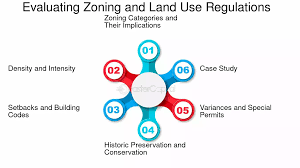
Understanding the inherent value of each zoning category is crucial for investment and change of user justification.
3.1 Residential Zoning (Low, Medium, and High Density)
Residential zones are managed to control population density.
- Low Density (e.g., Karen, Runda): Large plot sizes, stand-alone homes, strict height limits. Change of User is difficult to get approved.
- High Density (e.g., Kilimani, Pipeline): Allows for high-rise apartments and maximised plot coverage. Land here commands a premium due to high potential returns from multiple units.
3.2 Commercial and Mixed-Use Zoning
These zones carry the highest value due to their income-generating potential.
- Commercial: Exclusively for business (offices, retail, malls).
- Mixed-Use (MUD): Allows a blend of residential units, commercial offices, and retail space. This is increasingly popular and often yields the highest ROI due to diversified income streams.
3.3 Agricultural Zoning (The Thigio in Kikuyu Case)
Many high-growth corridors like Thigio in Kikuyu and its surrounding areas were originally, and are often still legally designated as, agricultural land.
- Opportunity: Land prices are often lower than designated residential land. The Change of User from Agricultural to Residential (or high-density development) is the Ultimate Profit Leap. This transformation, driven by infrastructure and market demand, is precisely where investors secure massive capital gains. However, this process requires mandatory Land Control Board (LCB) consent (for freehold land) in addition to the County’s PPA 2 approval.
4.0 The Danger Zone: Reasons for Denial and Penalties
The Change of User process is not guaranteed and requires absolute compliance to AVOID major penalties.
4.1 Conflict with the County Spatial Plan
The number one reason for denial is that the proposed change directly conflicts with the County’s overall spatial plan (e.g., trying to convert essential public utility land, or developing high-rise apartments in a low-density buffer zone). The County Planning Committee will not approve changes that undermine the orderly development of the area.
4.2 Demolition and Fines for Non-Compliance
PLUPA grants County Governments strong enforcement powers.
- Risk: Building a commercial structure on land still zoned as residential without an approved PPA 2 exposes the owner to enforcement notices, stop orders, hefty fines, and ultimately, demolition of the illegal structure at the owner’s cost. This threat underscores why the legal process must be completed before construction begins.
5.0 The Dennkarm Prime Properties Advantage in Zoning
Dennkarm Prime Properties’ expertise is in providing land that maximizes the investor’s chances of a successful Change of User or already aligns with the highest use potential.
5.1 Pre-Vetted Land for Feasibility
While Dennkarm sells land with current zoning, our selection process targets parcels strategically located within the County’s identified “Future Urban Growth Corridors” (like Thigio in Kikuyu). This proximity to planned future commercial zones ensures the Planning Brief for a Change of User (e.g., from Residential to Commercial) has a strong, justifiable case, maximizing the probability of County approval.
5.2 Guidance on the Highest and Best Use
Dennkarm Prime Properties can provide expert guidance, linking clients with certified physical planners who are familiar with the specific zoning requirements of Kiambu County, ensuring the investor targets the Highest and Best Use for their asset, whether it’s commercial rental in an accessible area or high-density residential development.
6.0 More Information
For professional assistance and deep understanding of the legal and planning requirements in Kenya, consult the following official resources:
- The Physical and Land Use Planning Act, 2019: The primary legal framework governing zoning and development control in Kenya.
- Kiambu County Government Official Portal (Physical Planning): For specific local planning guidelines, zoning maps, and application forms (PPA 1 and PPA 2).
- Institution of Surveyors of Kenya (ISK): For finding and verifying the credentials of a Registered Physical Planner.
- Land Control Act (Cap 302): Essential for understanding the requirements for Land Control Board (LCB) consent when dealing with agricultural land.
- 4 Promising Up and Coming Real Estate Hotspots in Kenya
- 5 Best Ways to Finance Land in Kenya
7.0 Call to Action
Stop letting outdated zoning laws limit your Real Estate Investments! Unlock your land’s Ultimate potential by planning your Change of User strategically.
Contact Dennkarm Prime Properties today to secure a strategically located, clean-titled plot in Thigio in Kikuyu that is perfectly situated for future profitable rezoning!
Dennkarm Prime Properties Contact Details:
- Phone/WhatsApp: 0722-45-45-18 or 0101-45-45-00
- Email: info@dennkarmproperties.com / sales@dennkarmproperties.com
- Website: Dennkarm Prime Properties